RD

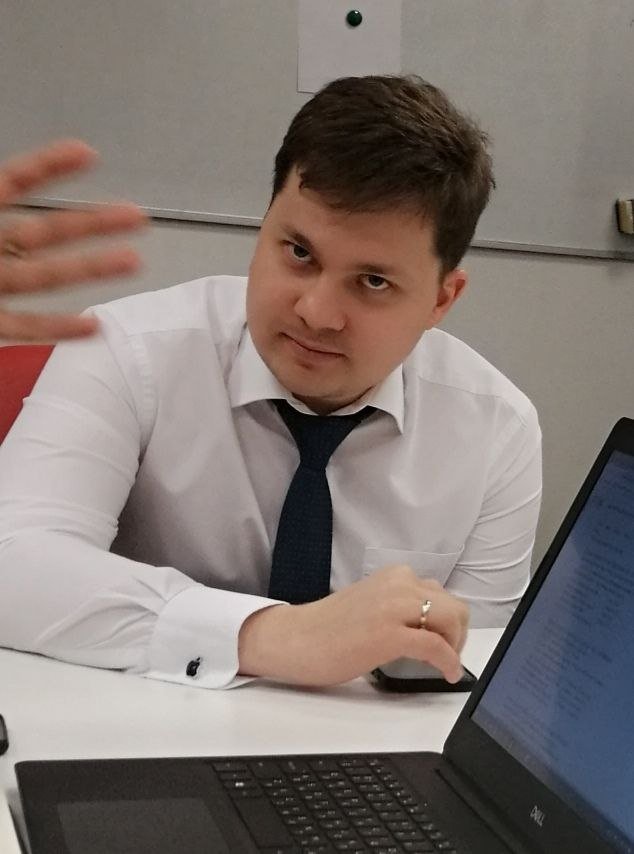
Radik Davletshin

proven financial systems architect
— scaling value across capital-intensive environments


Radik is a financial systems architect with 15+ years working on one problem: how to manage finances and assets effectively inside complex, capital-intensive, distributed systems.

His path has run through international consulting, hard industries, institutional investment, and fintech product roles — each role broadening and sharpening the same core expertise.

Across these contexts, one practice has been consistent: applying scientific rigor and systems thinking to design financial architectures tailored to each business environment — turning them into integrated platforms that optimize asset performance and enable durable operations and growth.

The practice rests on academic foundations — PhD in Economics, specialized in construction economics, with research in applied financial modeling and economic systems design. PMP certified. Operates fluently across English- and Russian-speaking environments, with consulting and corporate experience spanning Central Asia, Europe, and Asia-Pacific markets.

Radik Davletshin

His path has been a deliberate sequence — not a search for direction. Before studying economics, Radik went to work on a construction site to understand how business operates before learning the doctrine. That instinct — practice and theory have to be integrated — has shaped every step since.

He started in international management consulting at top-tier firms, diagnosing financial and operational problems inside the largest corporations across oil & gas, metals, banking, and infrastructure. Consulting became the laboratory: dozens of industries, hundreds of systems, and a recurring pattern of where complex organizations leak value.

In parallel, Radik completed a PhD focused on managing enterprises in capital-intensive sectors with long cycles and complex logistics — research that became the theoretical backbone for everything that followed, reinforced by a PMP certification grounding the same systems lens in the discipline of project execution.

Radik Davletshin in academic setting

Consulting reveals the inefficiencies in how organizations operate, but you see them as a project — from the outside, in fixed engagements. To really build something that has to live for years, you have to move inside.

Radik did, taking senior finance leadership inside systemically important industrial groups in aviation, civil engineering, and transportation. The work spanned multinational programs and cross-border operating environments, with finance and treasury functions reaching across multiple jurisdictions. These are hard industries — long cycles, heavy bureaucracy, structural resistance to change — and that is where he built financial-technology platforms from the inside: cash management systems, treasury and corporate finance functions designed not as siloed processes but as integrated platforms holding the balance between projects and processes.

He also represented the corporate finance side in major cross-border industrial programs, expanding his domain from treasury into the full finance function. The shift was from diagnosing systems to building them, where building is structurally difficult.

Radik Davletshin at work

Operating functions and processes is necessary, but they serve something larger: the asset itself. The real value of a complex system is unlocked at the level of the asset and its best use — capital structure, ownership design, exit logic — long before any operational decision is made.

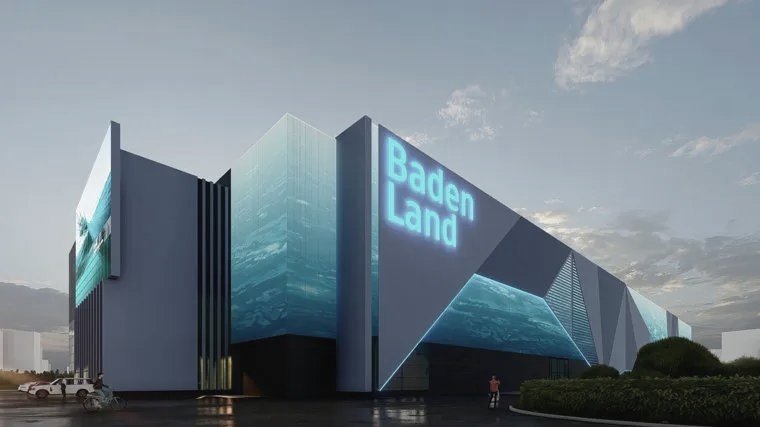
Radik moved up to that level as a leader of corporate finance and distressed commercial real estate at one of the largest investment funds in the region, working with assets and capital structures directly: restructuring underperforming portfolios, designing exit strategies, and building investment cases for value creation. The lens shifted from "how does this run" to "how is this designed to create value in the first place".

Baden Land — retail asset architecture

The widest level is the business as a whole — a self-contained system with an asset at its core, the operational logic around it, the financial architecture, and a product that ships. Less depth in any single layer than a pure operating role gives, but the broadest scope of integration.

Radik first joined a high-growth technology venture as interim Deputy CEO of finance and economics, rebuilding its financial platform — people, processes, and systems — simultaneously and on a live business, where finance had become the bottleneck of the next growth phase. The work synthesized years of accumulated practice into a short execution window, applying patterns proven in prior contexts and adapting them to the venture's specifics on the fly. He then took a senior role in fintech, where he designed the business model and concept for a new international product connecting traditional payment rails with trade finance, to strengthen cross-border settlements and Asian capital liquidity.

This is where the accumulated experience came together — systems thinking, operational depth, investment logic, and product design — synthesized into a single financial product addressing one of the harder problems in international finance.

Across consulting, hard industries, investment, and product, Radik has built a profile that operates at the level of the system — designing how its parts fit together, not running any one part in isolation.

His current practice is as an independent senior expert: engaged by corporate finance functions to design and rebuild them, by fintech ventures to architect products, and in investment situations to structure deals. The mandate is architectural — to set the system up so that it can run — drawing on the integrated experience of all four levels.

Radik Davletshin

I treat financial and operational environments as systems.

These principles have held across financial systems, investment frameworks, and enterprise-level decisions — and hold wherever asset value depends on how operations are run.

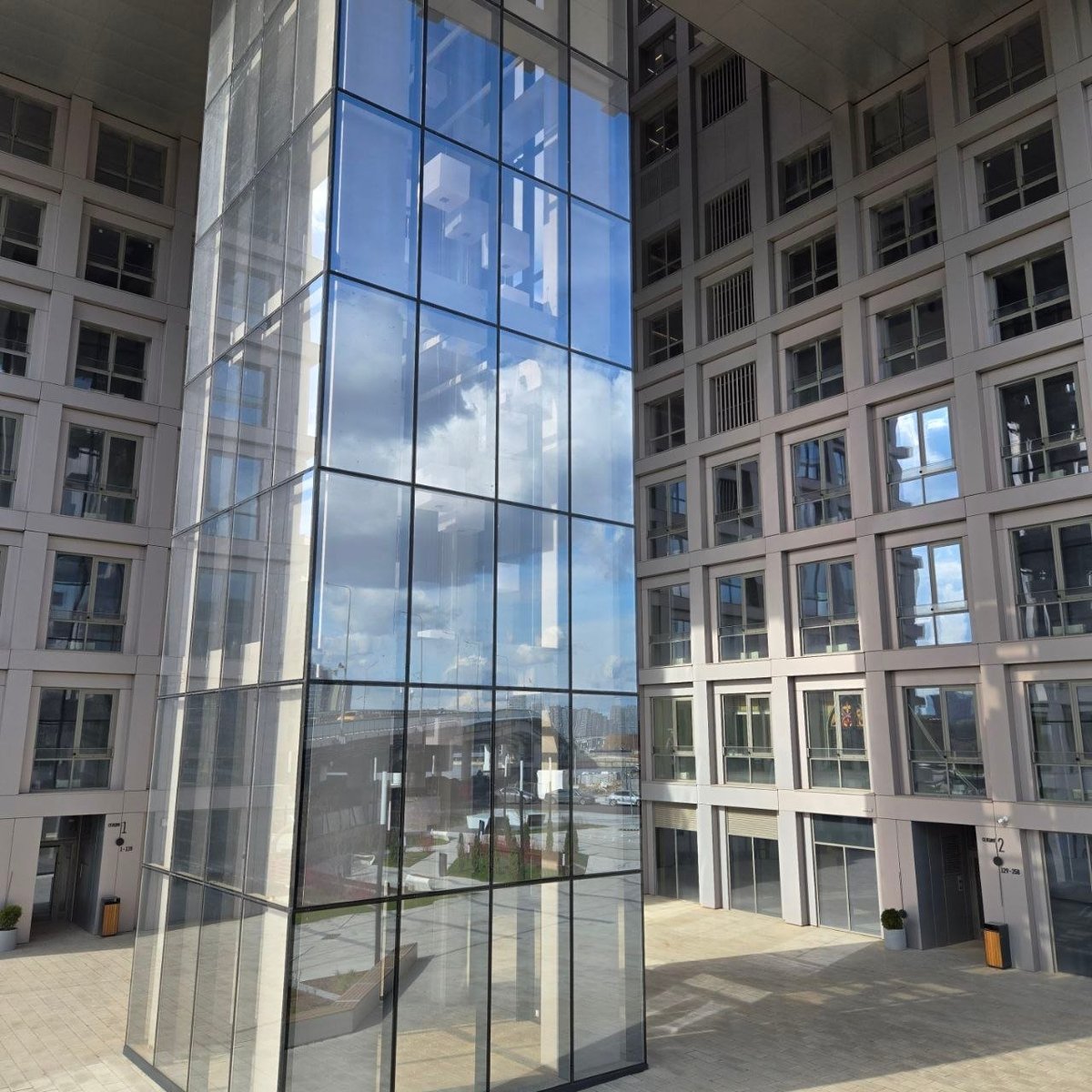
Beyond his core practice, Radik is also extending the same systems approach into real estate as a research and venture direction — applying it to income-producing residential assets such as BTR, coliving, and serviced living.

The premise: in most real estate assets, value leakage occurs at the operational level — between ownership, development, and execution.

A digital-first operating layer that integrates operations, financial logic, and data into a unified control system can address that gap, enabling continuous visibility into performance, standardized operational execution, alignment across stakeholders, and scalable replication of high-performing asset models.

In this model, digital infrastructure is not a support function — it is the control layer of the asset.

This work runs alongside Radik's primary practice in financial systems, fintech, and corporate finance — a focused exploration of how the same architectural principles apply to a new class of capital-intensive assets.

Building reflection

Want to get in touch?

Drop me a line

Radik Davletshin